I Built Three Projects Without Typing a Single Line of Code



Could you imagine spending 10 years honing your coding skills, only to one day put your hands in your pockets and simply tell an AI to build your next project? That’s exactly what I did. As a seasoned engineer, I recently discovered a new level of “code-free coding” that has completely changed the way I approach software development. In this article, I’ll show you how I used AI-powered tools (specifically an app called Cursor) to build three automation pipelines—no manual coding required. The results were not only incredibly effective but also a lot more fun and chill than traditional development workflows.
Why “No-Code” After a Decade of Coding?
After ten years of writing code day in, day out, I stumbled upon an idea: What if the future of coding was about talking more than typing? This curiosity led me to try tools that leverage conversational AI to generate entire software pipelines. I started with small experiments, but soon realized the potential to build real products without physically touching any of my IDE’s code files. It felt like telling a very talented intern exactly what I wanted—only this intern never sleeps, never complains, and doesn’t make (too many) mistakes.
Below are three “chill and happy” projects I created, relying solely on my voice and text prompts.
Project #1: Automated Podcast Pipeline
- The Idea: I have a weekly podcast schedule but hate the repetitive tasks—generating show notes, creating AI-driven voiceovers, uploading them, and writing descriptions.
- No-Code Solution:
- Prompt the AI with short bullet points about my podcast topics.
- AI then generates the script and pairs it with a text-to-speech API to produce a complete audio file. It even crafts a catchy episode title and a concise, SEO-friendly description.
- Finally, it uploads the entire package to my podcasting platform automatically.
- Result: In less than an hour, I batch-create seven episodes—enough content for a whole week or more. Instead of meticulously coding workflows, I literally talked my way to fully-produced podcasts.
Why It’s Surprising: People think producing audio content is time-consuming. But with a straightforward pipeline and some well-structured AI prompts, you can scale your podcast output without losing quality—or your sanity.
Project #2: Dog Adoption Music Videos
- The Idea: I composed music about dogs and wanted to do something meaningful with it. So I thought, “What if I combine my tracks with dog adoption listings to create uplifting videos that can help dogs find new homes?”
- No-Code Solution:
- Tap into an Adoption Listing API: Cursor fetches real-time dog profiles, including images and contact info.
- Automate Visuals: With a few instructions, the AI overlays text (like the dog’s name or location) on the images.
- Video Generation: It compiles those labeled images alongside my original dog-themed soundtrack, adds transitions/effects, and renders a complete video.
- Automatic YouTube Upload: The final step is uploading these videos to my channel—again, no manual steps needed.
- Result: I generated multiple short videos that highlight adoptable dogs, each set to my own music track. Talk about a creative, heartwarming intersection of technology and social impact!
Why It’s Surprising: Who would’ve guessed that an engineer known for coding would make an emotional appeal for dog adoption—all without writing a single function or loop? It’s yet another sign that AI-assisted creativity goes far beyond typical corporate use cases.
Project #3: The AI-Hosted Podcast
- The Idea: Traditional two-person podcasts can be a scheduling nightmare, especially if you rely on someone else to handle intros, keep the conversation flowing, and ask follow-up questions. So I asked myself: Why not let AI be my co-host?
- No-Code Solution:
- Define Roles & Prompts: I feed background info and show outlines into Cursor, telling it how to act as a curious, engaging host.
- Interactive Chat: The AI generates responses to my main talking points, prompting me for deeper insights—just like a real conversation partner would.
- Automated Voiceovers: With text-to-speech tools (TTS), the system converts our “chat” into distinct voices—one for me and one for the AI host.
- Fully Produced Episodes: At the end, the pipeline wraps up the conversation and bundles it into a neat audio file. If I want, I can even script both the host and the guest, letting the AI do most of the heavy lifting.
Why It’s Surprising: We’ve all heard of chatbots, but an AI performing as a podcast personality feels like stepping into the future of media production—no more chasing co-hosts or scheduling conflicts, and a consistent, energetic voice that I can tweak anytime.
Lessons Learned from “No-Code” Coding
- Efficiency is a Mindset: Once I realized I could talk my ideas into reality, I stopped writing boilerplate scripts. That time saved translates directly into more creativity and more projects.
- Stress-Free Creation: The entire process feels chill and happy. No frantic debugging at midnight—just refining prompts and letting AI handle the heavy lifting.
- Infinite Experimentation: Because generating (and regenerating) solutions is so quick, it’s easier to pivot on a whim. Want a different background music? Different voice? Different script style? Just say the word.
- Broader Impact: From helping dogs find homes to automating weekly content, letting AI do the grunt work freed me to focus on the why instead of the how.
Here’s the kicker: I still adore coding. But giving voice to ideas—literally!—has opened up a new world of possibilities. Whether you’re a fellow software engineer, a creative soul, or a business leader, imagine what could happen if you, too, shifted from typing your vision to speaking it. The next “big thing” might just be one voice command away.
What’s Next? I’m already thinking about other media and automation experiments—video series, interactive art installations, AI-powered business solutions—anything that can remove the mundane friction from creation. So if you’re curious, excited, or even skeptical about the “no-code” future, I invite you to embrace it with an open mind. It’s not here to replace your hard-earned skills—it’s here to amplify them.
Final Thoughts
To me, there’s no going back. My 10 years of coding experience didn’t become irrelevant; it just evolved. With AI, I’m putting my knowledge into guiding, shaping, and fine-tuning high-level concepts. Every day feels like a collaboration with a brilliant partner who executes exactly what I envision. And the best part? I get to keep my fingertips free while innovation flows—making work not feel like work at all.
Ready to pass the mic to AI? Feel free to drop a comment or message and let’s geek out about the endless possibilities of “no-code” coding together. Because trust me—once you experience it, you’ll never see development the same way again.
继续阅读
全部内容
The AI-Native Way of Developing Software: A Personal Journey into the Future of Coding
Introduction: From Skeptic to Believer in AI-Assisted Coding I still remember the first time I pair-programmed with an AI. It was late 2021, and I had just inst...

Learning from a “Failed” Cursor Project: Why It’s Sometimes Better to Start Fresh
Have you ever spent days refactoring code, only to discover it would have been faster—and more effective—to start over? If this sounds familiar, you’re not alon...
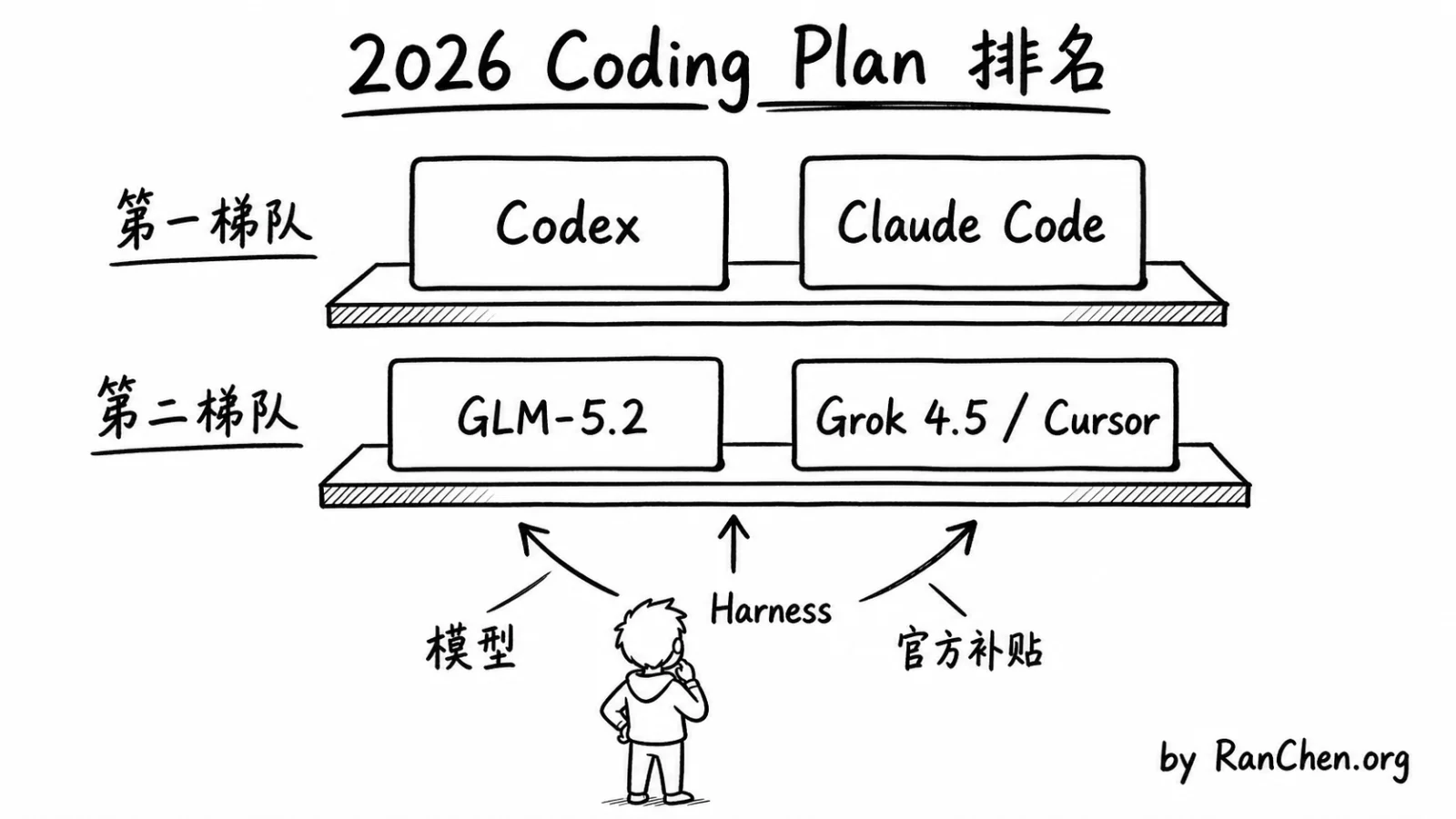
2026 年 Coding Plan 对比与排名:Claude Code、Codex、Cursor 怎么选
前段时间我在播客里说,自己一个月大约会用掉 100 亿 Token,也就是 10 billion。很多人的第一反应不是好奇我拿它做了什么,而是:“不可能,那得多贵?” 现在我的用量已经到了每月 500 亿到 1000 亿 Token。主要是创业公司里的正常开发、automation workflow 和一些自己的项目。...